
How to Import Auto Parts from China: RFQ, QC and Shipping
Wholesale import guide for auto parts from China: RFQ, supplier checks, samples, inspection, payment terms, and shipping. Catalog websites are only one discovery channel.
Share this guide
Table of Contents
This page is for importers, wholesalers, and repair networks that can plan a mixed order. It is not a retail shopping list for one urgent repair. The same sequence applies if you sell into the Middle East, Africa, Southeast Asia, South America, or Eastern Europe. Your destination broker still has to confirm HS codes, duty, and entry documents for that market.
Buying auto parts from China can cut acquisition cost and widen the range you stock. The unit price on a chat quote is only one input. Wrong fitment, weak packing, unclear trademarks, or a late vessel can erase the saving.
Some buyers see a 30 to 60 percent gap versus domestic distribution on suitable products. Treat that as a possible gross-price gap, not a guaranteed net saving. Compare landed cost after samples, inspection, packing, freight, duty, brokerage, rework, and warranty exposure.
The rest of this guide is the import sequence we use on live orders: decide if China fits the job, choose a buying channel, write an RFQ, check samples, freeze payment terms, inspect, pack for export, and clear customs.
In this guide
- Who a China auto parts order is for
- What a usable order costs
- Where to buy
- Payment terms
- RFQ, samples, inspection, packing, freight, and customs
- FAQ
Part 1: Is Sourcing From China Right for You?
China sourcing works when the order is large enough, and stable enough, to justify a procurement process. Skip it for an urgent one-off repair, an unidentified part, or a tiny quantity of a highly specialized component.
Start with MOQ, not the advertised price
Minimum order quantity depends on how the part is made and whether it already exists in stock:
| Part type | Typical buying reality |
|---|---|
| Common filters, bulbs, sensors, and service parts | Carton quantities or mixed orders may be possible through a distributor or stock-holding supplier |
| Brake pads, bearings, suspension parts, and engine mounts | Often tens to hundreds per reference, with better pricing at consolidated volume |
| Body parts, glass, lamps, and bulky assemblies | MOQ may be manageable, but freight volume and damage risk dominate the economics |
| Rubber, plastic, cast, forged, or machined custom parts | Tooling and production setup can push MOQ into hundreds or thousands |
| Electronics and modules | MOQ varies; software, protocol, chip availability, and testing are as important as quantity |
| Private-label packaging | Printing plates, label runs, and carton quantities create a second MOQ separate from the part |
Ask whether the MOQ applies to one OE reference, one vehicle model, one color, one package design, or the total order. A supplier saying “MOQ 100” may mean 100 pieces per SKU, not 100 pieces across your complete list.
Accept the real lead time
For a repeat product using available materials, 30 to 60 days from deposit to cargo readiness is common. A first order can take longer because you need quote clarification, samples, revisions, packaging approval, production, inspection, and booking.
Add freight time after that. Air cargo may move in days, but sea LCL or FCL is planned in weeks, and port congestion, customs review, or inland delivery adds uncertainty. If you need the part next Friday, buy locally. If you can forecast demand by quarter, China sourcing becomes much more practical.
Understand OEM, aftermarket, genuine, and replica
These terms are often used loosely:
- Genuine part means a part sold under the vehicle maker's brand and supported by a legitimate supply chain.
- OEM supplier means a company that manufactures for an original-equipment program. It does not mean every unbranded item it sells is a genuine vehicle-brand part.
- Aftermarket part is made for replacement use outside the vehicle maker's branded distribution channel. Quality can range from excellent to unacceptable.
- Private-label part is sold under your brand, with specifications and packaging agreed with the manufacturer.
- Replica or counterfeit part copies protected branding, packaging, or identity without authorization. Do not treat it as a cheaper aftermarket option.
If a quotation says “OEM quality,” ask what that means in measurable terms: material grade, drawing, tolerance, test standard, production line, certification, and warranty.
You are ready if…
- You know the OE number, vehicle application, dimensions, photos, or sample needed to identify the part. If you only have a VIN, start with the VIN parts finder to find car parts by VIN number before writing a full RFQ.
- You can buy enough volume to absorb samples, inspection, and freight.
- You can wait for a planned production and shipping cycle.
- You know which product or market documents are required at destination, including the export license and trademark requirements for your product category.
- You have someone responsible for quote comparison, supplier follow-up, and defect decisions.
- You can define acceptable quality before production, not after the goods arrive.
What a first China auto parts order actually costs
Calculate the cost of a usable order, not just the sum of advertised unit prices. Ask for a written breakdown on the same quantities, specification, packing, and Incoterm. Name who quotes and invoices each item so fees are not counted twice.
| Cost item | What to confirm |
|---|---|
| Parts and minimum quantities | Price and MOQ per OE reference; distinguish a mixed-order total from a minimum per SKU. |
| Sourcing, samples and inspection | Scope, charging basis, sample courier and any laboratory work; confirm what is included before approval. |
| Packing and shipment coordination | Boxes, labels, pallets, collection from each supplier and consolidation; note separate charges and readiness dates. |
| Freight and destination costs | Obtain current freight, duty, tax and clearance estimates from your forwarder or broker for the actual route and product. |
A lower unit price can require a larger order or leave work outside the quote. For mixed replenishment, compare which references each supplier can accept and when they will be ready. Kymon coordinates procurement; freight and destination clearance remain with the appointed specialists.
Compare supplier quotations · Review sourcing support
Part 2: Finding the Right Supplier
The easiest supplier to find is rarely the easiest supplier to manage. Discovery platforms give you candidates; verification turns a candidate into a purchasing option.
Where to buy auto parts from China
There is no single best website for Chinese car parts. The right channel depends on whether you need a stocked SKU, a factory that can repeat a drawing, or a mixed list with fitment risk.
| Channel | Best use | Main limitation |
|---|---|---|
| Alibaba | Export-ready discovery, messaging, samples, and platform transactions | Many sellers are trading companies; badge quality varies |
| 1688.com | Domestic pricing signals and deeper access to Chinese supply chains | Chinese-language workflow, domestic payment/logistics, and unclear export readiness |
| Canton Fair / Automechanika Shanghai | Face-to-face comparison, samples, product breadth, relationship building | Booth cost and presentation do not prove manufacturing ownership |
| Guangzhou and other parts markets | Seeing stocked body and service parts before you buy | A stall is not a factory audit; export identity can be unclear |
| Online wholesale catalogs | Browsing common SKUs and photos | Fitment and current stock still need confirmation |
| Direct factory after verification | Repeat SKUs, private label, stable drawings | Weak for a first mixed list if the part is not identified |
| Google and industry directories | Finding specialized exporters outside major platforms | More manual verification; websites can be outdated |
| Referrals and sourcing teams | Faster access to known category suppliers and local checks | Quality depends on transparency and whether incentives are disclosed |
Use at least two channels. A company that shows up in registration data, export paperwork, factory video, and product documents is easier to evaluate than one that exists only as a marketplace storefront. Catalog sites help you browse. They do not replace an RFQ, a sample, or inspection.
For a method-by-method comparison, read How to Find Chinese Manufacturers for Auto Parts: 6 Methods That Actually Work. Once you have candidates shortlisted, read the full guide on how to evaluate a Chinese supplier for European and U.S. market requirements.
Five communication red flags
- Every answer is “yes.” You ask for three materials, five vehicle applications, a custom box, and a 12-day lead time; the seller accepts everything without engineering questions.
- The company identity keeps changing. The marketplace name, business license, bank beneficiary, invoice exporter, and email domain are unrelated, with no clear explanation.
- Specifications are replaced by adjectives. Replies say “top quality” and “same as original” but avoid drawings, material grades, standards, tolerances, or test reports.
- The quote is incomplete. A very low unit price excludes tooling, packaging, tax, inland freight, export handling, or required testing.
- They pressure payment before clarification. A supplier who will not freeze the specification but urgently wants a deposit is moving risk to you.
A weak reply looks like this: “Dear friend, quality no problem, all models available, best price, pay today.”
A useful reply sounds different: “Please confirm the OE number and vehicle year. Your photo shows two bushing diameters. We can quote both after checking the sample. The price includes neutral box packaging but not your printed carton.”
Verify the operation by video call
Ask for a live call, not an edited promotional video. Have the contact move from the entrance or office to:
- Raw-material or incoming-goods area
- Production floor and active machines
- Molds, fixtures, or product-specific tooling where relevant
- In-process quality station
- Measuring equipment and calibration labels
- Finished-goods area
- Packaging line and shipping dock
Ask them to show today's date beside your sample, label, or drawing. This does not replace an audit, but it quickly reveals whether the contact understands the operation and whether the claimed facility is accessible to them.
Part 3: The Sourcing Process Step by Step
Step 1: Prepare a professional RFQ
A strong request for quotation prevents suppliers from making different assumptions. Send a spreadsheet rather than a long chat message.
Include:
- Your company, market, and intended use
- OE number and manufacturer reference number
- Vehicle make, model, year, engine, chassis, and market version
- Clear photos from several angles, labels, connectors, and dimensions
- Material, finish, hardness, tolerance, performance, or test standard
- Estimated quantity per SKU and annual demand
- Genuine, aftermarket, or private-label requirement
- Packaging, barcode, label, language, and carton-mark requirement
- Certificates or destination-market documents
- Required Incoterm and destination
- Sample quantity and target order date
Copyable RFQ template:
Subject: RFQ - [Part category] for [market] - [number of SKUs]
Buyer: [Company, country, website]
Application: [Vehicle / OE number / year / engine]
Specification: [Material, dimensions, standard, drawing revision]
Quantity: [Trial order and forecast]
Quality documents: [Test report, certificate, inspection requirement]
Packaging: [Neutral or private label, barcode, carton mark]
Quote basis: [EXW / FOB port / CIF port / DDP address]
Please state separately: unit price, MOQ per SKU, sample cost, tooling, lead time, payment terms, carton size/weight, HS code suggestion, and quote validity.
Do not send only “Please quote brake pads for Toyota.” Even a correct-looking pad can differ by market, caliper, trim, or production year.
If the list is already mixed, send it as an RFQ instead of shopping a catalog as if it were warehouse stock.
Request an RFQ review · Auto parts sourcing
Step 2: Compare quotes beyond unit price
Build a normalized comparison sheet. Put every supplier on the same Incoterm and specification.
Compare:
- Unit price at the same quantity
- MOQ per SKU and total order
- Tooling, mold, fixture, and artwork charges
- Sample price and whether it is refundable
- Material and test standard
- Packaging included in the price
- Production lead time after sample approval
- Payment terms and beneficiary identity
- Warranty and claim process
- Carton dimensions, net/gross weight, and pallet plan
- Exporter identity and available documents
A $4.80 part in a weak carton with no inspection access can cost more than a $5.20 part that arrives saleable.
Agree payment terms before the deposit
Freeze payment on the same sheet as the specification. A first order often uses a T/T deposit to start production and a balance after inspection or before shipment. A letter of credit can fit larger or repeat orders if both banks can process it.
Pay only the licensed company named on the contract, invoice, and bank beneficiary. If those three names do not match, stop. Platform escrow can reduce some payment risk. It does not freeze fitment, material, or packing.
Do not send a deposit while the seller is still changing the part number, the factory address, or the exporter identity.
Step 3: Order samples and inspect the right things
Use a golden sample: a signed or clearly photographed reference that defines what production should match. If you approve a revised sample, update the revision date so nobody compares production against the wrong version.
Check:
- Fitment: mounting points, threads, connectors, splines, clearances, left/right orientation
- Material: grade, hardness, rubber compound, friction material, coating, thickness
- Finish: burrs, corrosion protection, paint, plating, weld appearance, surface defects
- Function: electrical response, pressure, movement, noise, heat, load, or leak behavior as relevant
- Marking: part number, batch code, voltage, direction, warnings, country of origin
- Packaging: protection, moisture control, labels, barcode scanning, carton strength
One sample proves only that one sample can be made. It does not prove stable mass production, so keep a pre-shipment inspection in the plan. For a complete guide on how to verify the authenticity and quality of finished goods and protect against substandard parts, read the dedicated guide.
Step 4: Define AQL inspection before production
AQL (Acceptance Quality Limit) is a sampling method, not a promise of zero defects. The inspector selects units from a completed batch using an agreed sampling plan, then compares defect counts with acceptance limits.
Define defects for your part:
- Critical: could create a safety, legal, or severe functional risk, for example the wrong safety-critical material, missing mandatory warning, exposed live conductor, or a part that cannot be installed safely.
- Major: likely to cause failure, return, fitment rejection, or loss of normal use, for example wrong dimensions, non-working sensor, cracked housing, serious corrosion, or incorrect model label.
- Minor: workmanship or appearance issue that does not normally prevent use, for example a small cosmetic mark or slightly misaligned non-critical print.
A common starting point for general consumer goods is Critical 0, Major AQL 2.5, Minor AQL 4.0. Do not copy that blindly for safety-critical auto parts. Your product standard, test method, sample size, and acceptance rule should be agreed with a qualified inspection provider. Critical characteristics may require tighter limits or 100% checks.
The inspection checklist should include quantity, workmanship, dimensions, functional tests, markings, packaging, carton drop or compression requirements where relevant, and photos tied to batch numbers.
Step 5: Design packaging for the route
Domestic factory packaging is not automatically export packaging. The carton may be stacked, transferred, consolidated, stored in humidity, and handled many times.
Specify:
- Individual protection against abrasion, moisture, oil, and corrosion
- Dividers, caps, trays, foam, or molded supports for fragile surfaces and connectors
- Carton material and burst/edge-crush performance appropriate to weight
- Maximum gross weight a warehouse worker can handle safely
- Inner and master quantities that match your receiving process
- Pallet dimensions, corner protection, stretch wrap, straps, and fumigation-compliant wood where applicable
- Shipping marks, SKU, batch, quantity, gross/net weight, and country-of-origin wording
Ask for packed-product photos and a carton/pallet calculation before production finishes. For body panels, lamps, glass, and long suspension components, packaging engineering may matter more than another small unit-price discount.
Step 6: Choose air, LCL, or FCL using landed cost
| Method | Best for | Watch for |
|---|---|---|
| Express courier | Samples and small urgent cartons | Chargeable weight, battery restrictions, remote-area fees |
| Air freight | Urgent, compact, higher-value cargo | Airport handling, volumetric weight, destination clearance |
| Sea LCL | Orders too large for air but too small for a container | Minimum charges, consolidation handling, destination CFS fees, higher touch/damage risk |
| Sea FCL | Larger or bulky orders, better cargo control | Container utilization, demurrage, port and inland delivery planning |
| Rail or multimodal | Selected Eurasian routes | Schedule, border transfer, route availability, insurance terms |
There is no reliable universal “2026 price per CBM.” Freight moves with route, season, fuel, capacity, commodity, and destination charges. Ask two forwarders for a written comparison using the same cargo data: cartons, dimensions, gross weight, pickup city, Incoterm, destination postcode/port, and product description.
Request both freight cost and destination local charges. A cheap origin quote can hide expensive deconsolidation, documentation, port, or delivery fees.
Step 7: Prepare customs clearance before sailing
The supplier can suggest an HS code, but the importer and destination customs broker should confirm classification. Similar-looking auto parts may fall under different headings based on function and material.
Typical documents include:
- Commercial invoice
- Packing list
- Bill of lading or air waybill
- Certificate of origin when required
- Insurance certificate under the agreed term
- Product certificates, test reports, or conformity documents required by the market
- Fumigation or wood-packaging evidence where applicable
- Trademark authorization for legitimate branded goods
“Form A” is not a universal requirement and has been replaced or superseded in many trade arrangements. Ask your broker which origin document or preferential certificate is valid for your country and product in 2026.
Send draft invoice and packing list to the broker before departure. Correcting the product description, consignee, value, quantity, or HS code is easier before the vessel sails.
Do not copy a duty percentage from a blog post. Tariffs and extra duties change by destination and heading. Ask the destination broker for a current estimate on the actual HS code and origin before you pay a deposit. Kymon does not act as the importer of record or the customs broker.
Part 4: Five Common First-Time Buyer Mistakes
1. Ignoring Incoterms
EXW, FOB, CIF, and DDP allocate cost and responsibility differently. “Shipping included” is not precise enough. State the named place and Incoterms version, for example FOB Ningbo, Incoterms 2020, and ask what is excluded.
2. Budgeting only product price and freight
Landed cost may include duty, additional tariffs, VAT/GST, brokerage, port charges, storage, inspection, inland delivery, and financing cost. Ask a destination broker for an estimate before approving the order.
3. Trusting a platform badge alone
Verification labels can help screen candidates, but they do not confirm product fit, current capacity, material control, or your specific order. Verify the legal entity, bank account, operation, samples, and production documents.
4. Skipping sample or production inspection
Photos in a listing are not your specification. Approve a sample, freeze measurable requirements, and inspect the finished batch before paying the final balance when the risk justifies it.
5. Choosing the cheapest freight forwarder
A missing destination fee, wrong product declaration, weak dangerous-goods screening, or poor response during a customs hold can cost far more than the initial freight difference. Compare scope and operational clarity, not only the headline number.
Part 5: DIY vs Hiring a Sourcing Agent
| Factor | DIY sourcing | Sourcing agent or on-ground procurement partner |
|---|---|---|
| Direct cost | No agent fee | Percentage, project fee, or retainer should be disclosed |
| Time | You manage search, Chinese follow-up, samples, production, QC, and consolidation | Local team coordinates suppliers and reports decisions to you |
| Supplier access | Strong if you know the category and can verify independently | Useful when the order spans many SKUs, factories, or regions |
| Transparency | You control every contact | Require factory identity, fee model, and conflicts to be clear |
| Risk | Higher learning curve on first orders | Lower only if the agent has relevant experience and accountable processes |
| Best for | Experienced buyers, simple products, stable factories, larger repeat volume | First orders, mixed-SKU projects, private label, time-sensitive follow-up, multi-supplier consolidation |
A sourcing agent does not replace your freight forwarder, customs broker, laboratory, or legal adviser. The useful role is China-side execution: identifying and screening suppliers, clarifying RFQs, coordinating samples, following production, arranging inspection, and consolidating goods.
Read Who Can Help Me Import from China? Sourcing Agents, Freight Forwarders & More before deciding which role you need.
Kymon Parts acts as an on-ground sourcing and procurement partner for overseas auto-parts buyers. Send us your OE numbers, vehicle details, photos, quantity, target market, and packaging needs. We will review the request and explain the practical next step, whether that is supplier matching, sample verification, QC coordination, or consolidated shipping support.
Request an auto parts sourcing review
FAQ
Is it safe to buy car parts from China?
It can be safe when you verify the supplier, confirm fitment and specifications, approve samples, inspect production, and check import requirements before shipment. The country of origin is not a substitute for supplier-level due diligence.
How do I buy directly from Chinese suppliers?
Prepare a detailed RFQ, compare several qualified suppliers, verify their legal and production identity, order samples, agree on quality and packaging standards, inspect the finished order, and use a freight forwarder and customs broker for shipment and clearance.
Is Alibaba legitimate for auto parts?
Alibaba is a useful discovery and transaction platform, but badges do not prove that a seller is the right factory for your part. Verify independently.
What is the minimum order quantity?
It varies by manufacturing process, stock status, SKU, and packaging. Ask for MOQ per reference and for the total mixed order.
How much does shipping cost?
It depends on weight, volume, route, Incoterm, season, commodity, and destination fees. Use current written quotes and compare landed cost.
What is the best website for buying Chinese car parts?
There is no single best website. Alibaba and Made-in-China are discovery layers. 1688 shows domestic pricing. Catalog shops help you browse stocked SKUs. None of them replace fitment review, samples, or inspection. If you already have OE numbers and a mixed list, send an RFQ.
Who is a reputable auto parts supplier from China?
Reputable means a named legal entity that can show the factory or stock source for your part, match the sample, and export under a consistent invoice identity. Rankings and marketplace badges are not that proof. Verify registration, production access, and documents for the SKU you are buying.
What payment terms are normal for a first order?
Many first orders use a T/T deposit to start production and a balance after inspection or before shipment. Larger or repeat orders may use a letter of credit if both banks can handle it. Pay only the licensed company named on the contract.
Build a Repeatable Buying Process
Successful sourcing is not about finding one exceptionally low quote. It is about building a repeatable system that converts the right specification into verified production, protected cargo, correct documents, and a predictable landed cost.
Start with one well-defined order. Record every assumption in the RFQ, keep an approved sample, inspect what matters, and review the result after delivery. The second order should be easier because the first one created a process, not just a purchase.
Share this guide with your team
Send it to the colleague handling sourcing, quality checks, or logistics.
Services for your next purchasing step
Continue with the service that matches the checks or supplier decisions in this guide.
Author

Categories
More Posts
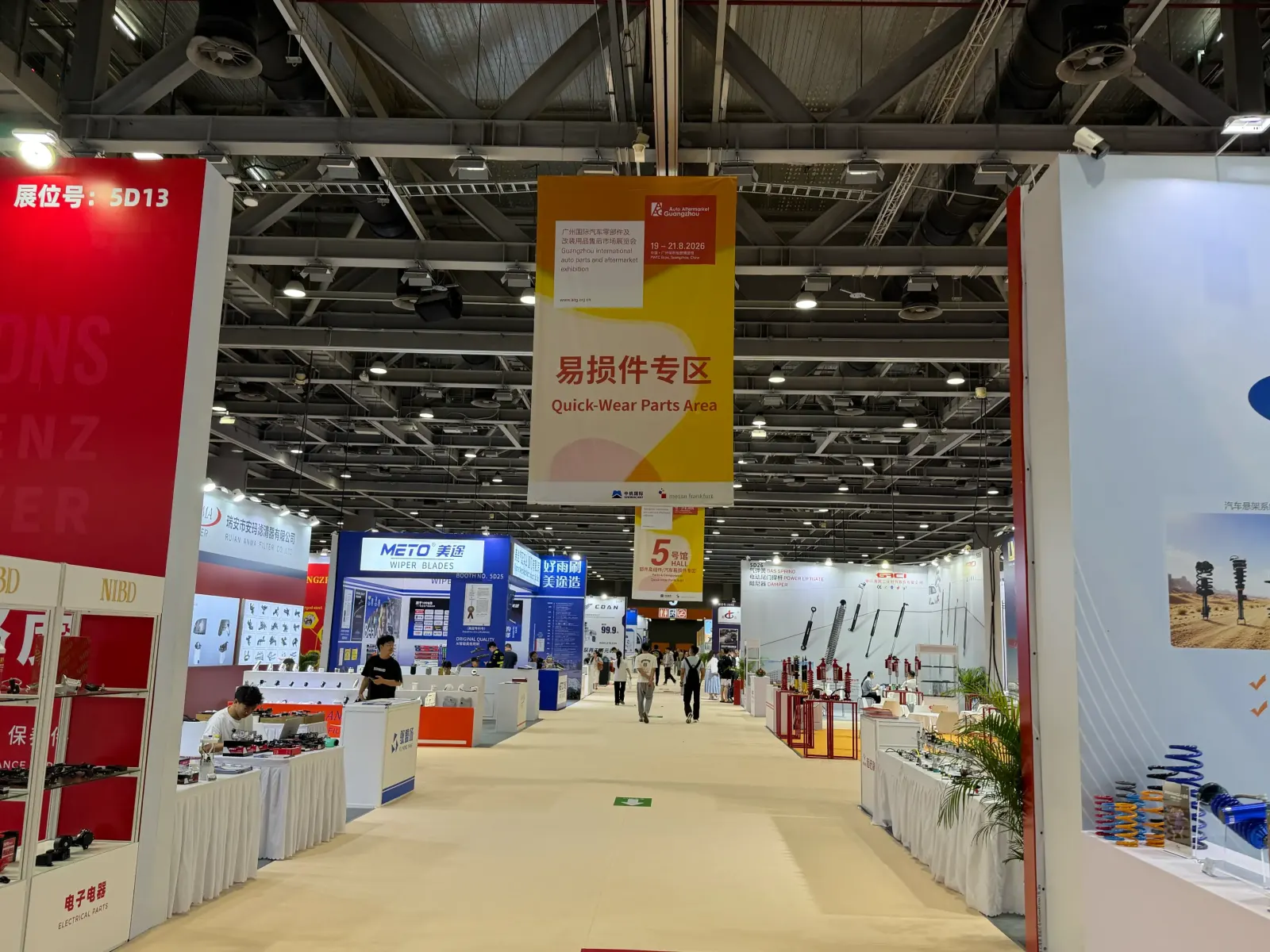
Source Auto Parts from China Without Walking the Trade Show (2026)
You do not need to walk Canton Fair, AAG in Guangzhou, or Automechanika Shanghai until your feet give out. Compare a China trip with RFQ, sampling, QC, and consolidation.

Small-Batch, Multi-SKU Auto Parts Sourcing from China
How wholesalers and repair businesses can plan mixed-SKU China auto parts orders using MOQ control, supplier grouping, samples, packaging, and consolidation.

Who Can Help Me Import from China? Agents & Partners
Understand what sourcing agents, freight forwarders, customs brokers, and inspection companies actually do—and which partners an auto parts importer needs.